Sprig Originals's kitchen / Layered Black Velvet (Stout & Champagne)
Layered Black Velvet (Stout & Champagne)
 By Sprig Originals · cooked up in Sprig
Worked out from this recipe's ingredients. If you're cooking for an allergy, always read the full ingredient list.
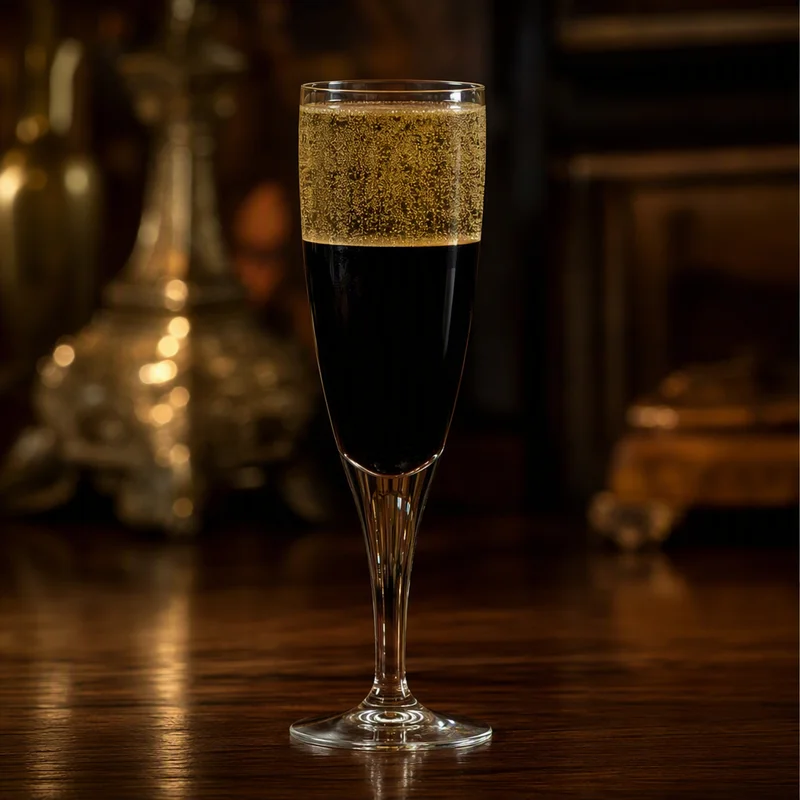
A two-ingredient London club classic from 1861: cold dry Irish stout on the bottom, brut sparkling wine floated on top so the drink sits in two clean bands — coffee-black below, pale gold above. The trick is nothing more than temperature and a slow pour over the back of a spoon. It tastes like a dry, roasty, faintly bitter mimosa, and it takes ninety seconds to build once everything is properly cold.
Ingredients
The Drink
- 8 oz dry Irish stout, very cold (about two-thirds of a 14.9-oz can)
- 8 oz brut Champagne, cava, or crémant, very cold
Optional Finishes
- 1 tsp crème de cassis (for a fruitier, deeper-colored version)
- 2 strips orange zest, for expressing over the glass
Instructions
- Chill everything hard. Refrigerate the stout and the sparkling wine at least 3 hours, until both read 38–40°F (an ice-water bath with a handful of salt gets there in about 20 minutes). Put two 8- to 10-ounce flutes or slender highball glasses in the freezer for 10 minutes. Warm liquid foams uncontrollably and the layers will muddle instantly, so do not skip this.
- Take the glasses from the freezer and set them on a towel. If using crème de cassis, add 1/2 teaspoon to the bottom of each glass now.
- Open the stout. Tilt the first glass to a 45-degree angle and pour 4 ounces of stout slowly down the inside wall, straightening the glass as it fills. Aim for no more than a half inch of foam on top; if you get more, wait 30 to 60 seconds for the head to settle and tighten before moving on. Repeat with the second glass.
- Bend a teaspoon or bar spoon so it rests against the inside of the glass, bowl facing up, tip just touching the stout's foam. Pour 4 ounces of sparkling wine very slowly onto the back of the spoon so it spreads sideways and settles on top of the stout rather than punching through it. Lift the spoon gradually as the level rises, keeping the bowl just above the liquid line. Repeat for the second glass.
- Serve immediately, undisturbed and unstirred — the layers hold about two minutes before they marble together, and the drink is meant to be drunk through both bands. If using, twist a strip of orange zest peel-side down over the surface to release its oil, then drop it in.
Chef's tips
- Layer order matters: unsweetened stout at 4–5% ABV is denser than a bone-dry 12% sparkling wine, so stout goes in first and the bubbly floats. Reverse it and you get a beige mess.
- Nitro cans and bottles with a widget make a gorgeous creamy head but a very thick one. Pour them extra slowly down the glass wall, or use a non-nitro bottled dry stout for the cleanest line.
- Poor Man's Black Velvet: swap the sparkling wine for 4 ounces of cold dry hard cider. It's the traditional pub substitute, costs a fraction, and the apple plays beautifully against roasted barley.
- Go brut or extra-brut. A demi-sec or sweet prosecco turns the whole drink cloying against the stout's bitterness.
- Don't waste vintage Champagne here — a $14 cava or crémant is the smarter buy, since the stout dominates the aroma either way.
- Building in a wider glass? A 10-ounce highball layers more forgivingly than a narrow flute because the spoon has room to sit flat. Scale to 5 ounces of each per glass.
- Open the sparkling wine last and pour straight from the bottle; a decanted or previously opened bottle has lost the pressure that keeps the top layer buoyant.
Nutrition (per serving, estimated)
113calories
1gprotein
9gcarbs
Estimates only — values vary with brands and portions.
Made with Sprig
Layered Black Velvet (Stout & Champagne) was created in Sprig — the AI chef that turns any craving into a complete recipe, plans your week, and shops with one smart list.
Free to start · 14-day Pro trial · cancel anytime
Not ready yet? Get the occasional recipe worth cooking — a couple a month at most.
You're on the list — check your inbox!
Unsubscribe anytime. Privacy Policy
More from Sprig Originals
French Onion Patty Melts on Rye
Dark Roux Seafood Gumbo with Quick Shrimp Stock
One-Skillet Blackened Cajun Chicken Pasta
Are you this recipe's original author or publisher? Report a problem