Sprig Originals's kitchen / Spicy Shredded Brisket Soup with Fernbrake and Scallions
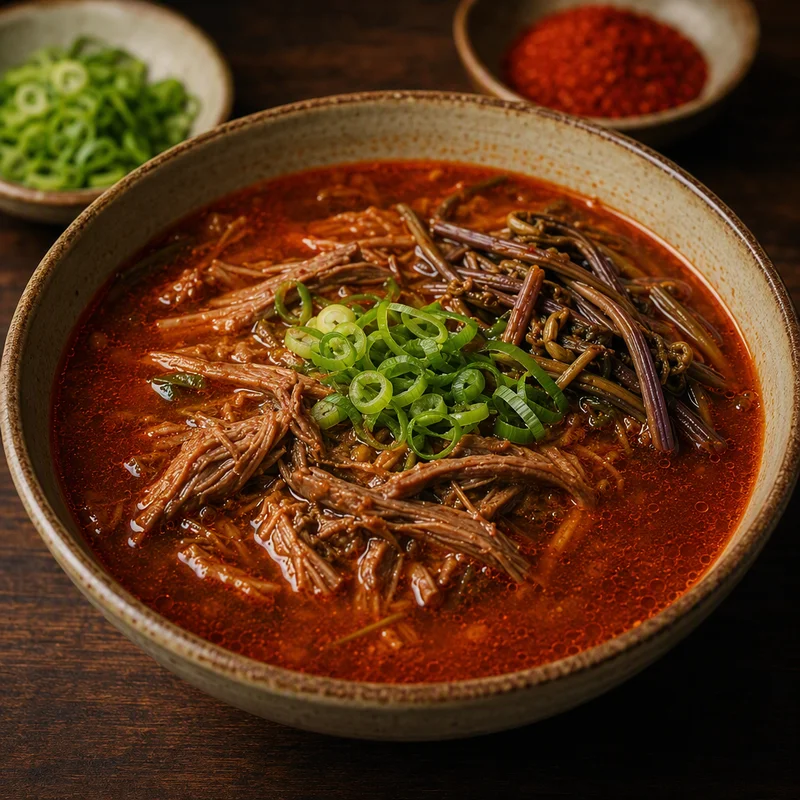
Spicy Shredded Brisket Soup with Fernbrake and Scallions
 By Sprig Originals · cooked up in Sprig
Worked out from this recipe's ingredients. If you're cooking for an allergy, always read the full ingredient list.
Brisket simmers low and slow until it pulls apart into silky threads, then the broth gets a spoonful of homemade gochugaru chili oil, springy fernbrake, mung bean sprouts and a whole bunch of scallions folded in at the end. It's deeply red, beefy and warming — and like all good braises, it's even better on day two once the chili oil and beef fat settle into the broth.
Ingredients
Beef and broth
- 2 1/2 lb beef brisket, flat cut, trimmed of hard fat
- 4 quarts cold water
- 1 medium yellow onion, halved
- 8 cloves garlic, smashed
- 1 piece fresh ginger, 2-inch, sliced
- 6 scallion roots and tough green tops (reserved from below)
- 1 tsp whole black peppercorns
Chili oil seasoning
- 1/3 cup neutral oil
- 1/3 cup gochugaru (Korean coarse chili flakes)
- 3 tbsp soy sauce
- 1 tbsp Korean soup soy sauce (guk-ganjang), optional
- 1 tbsp toasted sesame oil
- 4 cloves garlic, finely grated
- 1 tsp sugar
- 1/2 tsp freshly ground black pepper
Vegetables
- 2 oz dried fernbrake (gosari), or 8 oz prepared/frozen gosari
- 12 oz mung bean sprouts
- 2 bunches scallions (about 16), cut into 2-inch lengths
- 6 oz shiitake or oyster mushrooms, torn into strips
- 2 oz sweet potato starch noodles (dangmyeon), optional
To finish and serve
- 1 large egg, lightly beaten (optional)
- to taste kosher salt
- steamed short-grain rice, for serving
- kimchi, for serving
Vegetables
Instructions
- If using dried fernbrake, start it first: cover the gosari with plenty of cool water and soak 8 hours or overnight, then drain, cover with fresh water, bring to a boil and simmer 30–40 minutes until fully tender and no longer woody. Drain, rinse, squeeze dry, trim off any tough stem ends, and cut into 3-inch lengths. (Frozen or vacuum-packed prepared gosari only needs a rinse, a squeeze and a trim.)
- Put the brisket in a large pot, cover with cold water by 2 inches, and bring to a boil over high heat. Boil hard for 5 minutes, then drain and rinse the meat and the pot — this scum-removal step is what gives you a clean red broth later.
- Return the brisket to the clean pot with 4 quarts cold water, the onion halves, smashed garlic, ginger, reserved scallion roots and tops, and peppercorns. Bring to a boil, then reduce to a bare simmer (small bubbles, about 200°F) and cook uncovered, skimming occasionally, for 2 to 2 1/2 hours, until a fork slides into the brisket with no resistance and the grain pulls apart easily.
- Lift the brisket onto a cutting board and let it cool 15 minutes. Strain the broth through a fine-mesh sieve into a clean pot, discarding the aromatics. You should have about 3 quarts; add water if you have less. Skim most of the surface fat, leaving a thin slick for flavor.
- While the beef cools, make the chili oil: heat the neutral oil in a small skillet over medium-low until it shimmers, about 2 minutes. Turn off the heat, wait 30 seconds, then stir in the gochugaru — it should sizzle gently and turn glossy red without smoking. Scrape into a bowl and stir in both soy sauces, sesame oil, grated garlic, sugar and black pepper.
- Pull the brisket into thick shreds with your fingers or two forks, following the grain into strips about 1/4 inch thick and 2 inches long. Toss the shredded beef with half the chili oil mixture and let it marinate 10 minutes.
- Rinse the mung bean sprouts and drain. Bring the strained broth back to a simmer, then add the marinated beef, the fernbrake, the mushrooms and the remaining chili oil. Simmer gently, uncovered, for 20 minutes so the fat rises and the broth turns deep red.
- Add the bean sprouts and the dangmyeon, if using, and simmer 5 minutes. Stir in the scallions and simmer just 3 minutes more, until they are limp but still bright green. Taste and season with kosher salt (usually 1 to 2 teaspoons, depending on your soy sauce).
- If you like an egg ribbon, bring the soup to a strong simmer, drizzle the beaten egg in a thin stream over the surface, wait 20 seconds without stirring, then fold once gently.
- Ladle into deep bowls and serve very hot with steamed rice and kimchi. To go the traditional route, spoon the rice straight into the soup at the table.
- For the best version: cool the pot, refrigerate overnight, then reheat over medium heat for 10–12 minutes. The fernbrake softens, the chili oil settles into the beef, and the broth tastes twice as long-simmered.
Chef's tips
- This soup genuinely improves overnight — if you have the option, make it a day ahead and reheat. It keeps 4 days refrigerated and freezes well for 3 months (freeze before adding noodles).
- Don't skip the 5-minute parboil-and-rinse of the brisket. Skimmed foam clouds the broth and dulls the chili color.
- Take the pan off the heat before the gochugaru goes in. Chili flakes scorch in a few seconds at high heat and turn the whole pot bitter.
- No fernbrake? Substitute 8 oz rehydrated dried taro stem, or use 8 oz thinly sliced shiitake plus a handful of shredded napa cabbage for a similar chew.
- Brisket flat gives you clean shreds; chuck roast works too and is more forgiving, but it will break into chunks rather than strands.
- For a milder pot, cut the gochugaru to 3 tablespoons and add 1 extra tablespoon of soy sauce — you'll keep the color and lose most of the heat.
Nutrition (per serving, estimated)
487calories
34gprotein
22gcarbs
29gfat
Estimates only — values vary with brands and portions.
Made with Sprig
Spicy Shredded Brisket Soup with Fernbrake and Scallions was created in Sprig — the AI chef that turns any craving into a complete recipe, plans your week, and shops with one smart list.
Free to start · 14-day Pro trial · cancel anytime
Not ready yet? Get the occasional recipe worth cooking — a couple a month at most.
You're on the list — check your inbox!
Unsubscribe anytime. Privacy Policy
More from Sprig Originals
Dark Roux Seafood Gumbo with Quick Shrimp Stock
Chilled Watermelon Gazpacho with Cucumber-Chile Relish
French Onion Patty Melts on Rye
Are you this recipe's original author or publisher? Report a problem