Fettuccine Alfredo with a Real Parmesan Emulsion
 By Sprig Originals · cooked up in Sprig
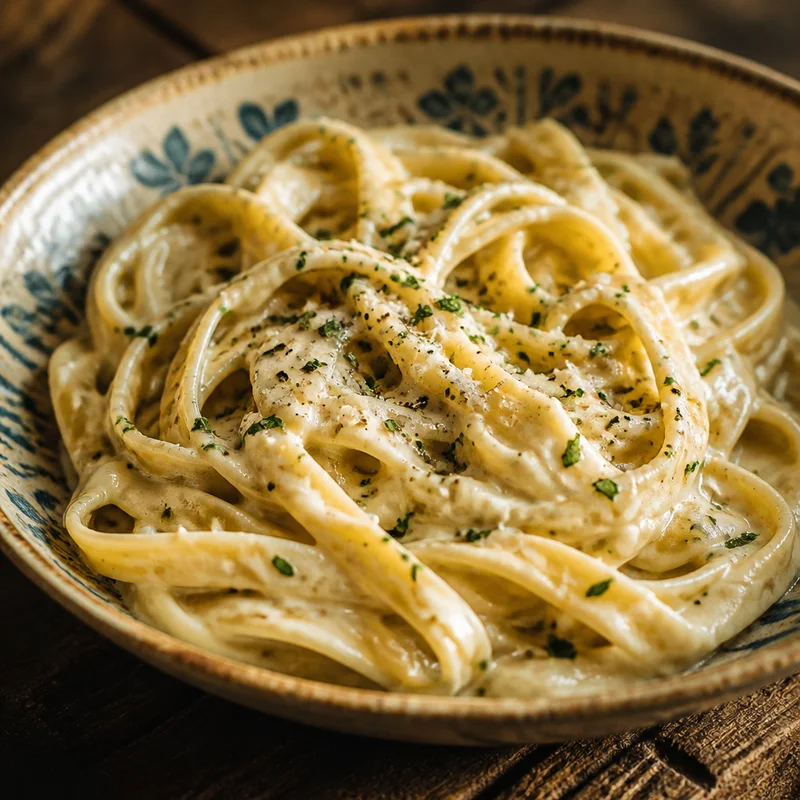
A true Alfredo is not a cream sauce — it's an emulsion. Cold butter, a mountain of finely grated Parmigiano-Reggiano and starchy pasta water are whisked together off the heat until they turn glossy and cling to every ribbon of fettuccine. A gentle garlic infusion in the butter nods to the Gulf Coast fine-dining version, and a tablespoon or two of cream is there as cheap insurance if your emulsion gets nervous. Cook the pasta in barely enough water and you'll have the thick, starchy liquid that does most of the work.
Ingredients
- 1 lb fresh or dried fettuccine
- 4 quart water
- 1 tbsp kosher salt
- 8 tbsp unsalted butter, cut into 1-tablespoon cubes and kept cold
- 2 clove garlic, peeled and lightly smashed
- 6 oz Parmigiano-Reggiano, grated on the finest holes of a box grater or Microplane (about 3 packed cups)
- 2 tbsp heavy cream (optional, as emulsion insurance)
- 1/2 tsp freshly cracked black pepper
- 1 pinch freshly grated nutmeg (optional)
- flaky salt, to finish
- 2 tbsp flat-leaf parsley, finely chopped (optional)
Instructions
- Grate the Parmigiano-Reggiano first, before anything else. Use a Microplane or the smallest holes of a box grater — the cheese must be powder-fine and fluffy, not shredded, or it will clump into strings instead of melting into an emulsion. Let it sit at room temperature while you work; cold cheese hitting hot pasta is the #1 cause of a broken sauce.
- Bring 4 quarts of water to a boil in a large pot and add 1 tablespoon kosher salt. This is deliberately less water than usual — you want the cooking water starchy and cloudy, because that starch is what binds butter and cheese together.
- While the water heats, put 4 tablespoons of the butter and the 2 smashed garlic cloves in a small saucepan over the lowest heat. Warm for 5 to 6 minutes, until the butter is melted and smells sweetly of garlic but has taken on no color at all. Fish out and discard the garlic, then pour the infused butter into a wide skillet or sauté pan. Keep the remaining 4 tablespoons of butter cold in the fridge.
- Add the fettuccine to the boiling water. Cook fresh pasta for 2 to 3 minutes, dried for 1 to 2 minutes short of the package's al dente time. Stir often during the first minute so it doesn't clump.
- Two minutes before the pasta is done, dip a heatproof measuring cup and reserve 2 full cups of the starchy cooking water. Set the skillet with the garlic butter over medium-low heat and add 3/4 cup of that pasta water. Swirl vigorously for about 30 seconds until the butter and water come together into a cloudy, slightly thickened liquid — this is your emulsion base.
- Drag the pasta straight from the pot into the skillet with tongs (a little clinging water is a good thing). Toss over medium-low heat for 60 to 90 seconds, until the noodles are coated and the liquid is bubbling gently around them.
- Now take the skillet completely off the heat and let it sit for 20 seconds. Direct heat above roughly 180°F will scramble the cheese proteins and give you an oily, grainy sauce. Off-heat is not optional.
- Add the cold butter cubes and toss until they melt into the pasta. Then add the grated cheese in three or four handfuls, tossing and stirring hard with tongs after each addition and adding a splash of hot pasta water (2 to 3 tablespoons at a time) along the way. Keep the pasta in constant motion — the agitation is what forces the fat and water into a single glossy sauce.
- Once all the cheese is in, the sauce should be thick, ivory and clinging to the noodles like a light glaze. If it looks tight or clumpy, add pasta water a tablespoon at a time and keep tossing; if it looks loose, return the pan to the lowest heat for 15 to 20 seconds while tossing. If it starts to look oily or separated, whisk in the 2 tablespoons of cold cream off-heat and toss hard — it will pull back together.
- Season with the black pepper, the nutmeg if using, and flaky salt to taste (the cheese is salty, so taste first). Divide among four warmed bowls immediately, scatter with parsley and a little extra grated Parmigiano, and serve at once — Alfredo waits for no one.
Chef's tips
- Warm your serving bowls under hot tap water and dry them. Cold ceramic chills the sauce and it will seize within a minute.
- Pre-grated Parmesan in a tub contains anti-caking cellulose that refuses to emulsify. Buy a wedge of real Parmigiano-Reggiano; it is the entire recipe.
- If your sauce breaks badly, don't panic: drain off any pooled fat, add 1/4 cup hot pasta water and toss furiously off the heat. Starch plus agitation rescues most broken emulsions.
- Fresh egg fettuccine releases more starch and gives a plusher sauce, but good bronze-die dried pasta works well — just be sure to undercook it by a full 2 minutes since it keeps cooking in the pan.
- Scale up carefully: emulsions get harder in crowded pans. For more than 4 servings, use two skillets rather than one giant pot.
Nutrition (per serving, estimated)
Made with Sprig
Fettuccine Alfredo with a Real Parmesan Emulsion was created in Sprig — the AI chef that turns any craving into a complete recipe, plans your week, and shops with one smart list.
More from Sprig Originals
Are you this recipe's original author or publisher? Report a problem