Sprig Originals's kitchen / Japchae with Marinated Beef and Glass Noodles
Japchae with Marinated Beef and Glass Noodles
 By Sprig Originals · cooked up in Sprig
Worked out from this recipe's ingredients. If you're cooking for an allergy, always read the full ingredient list.
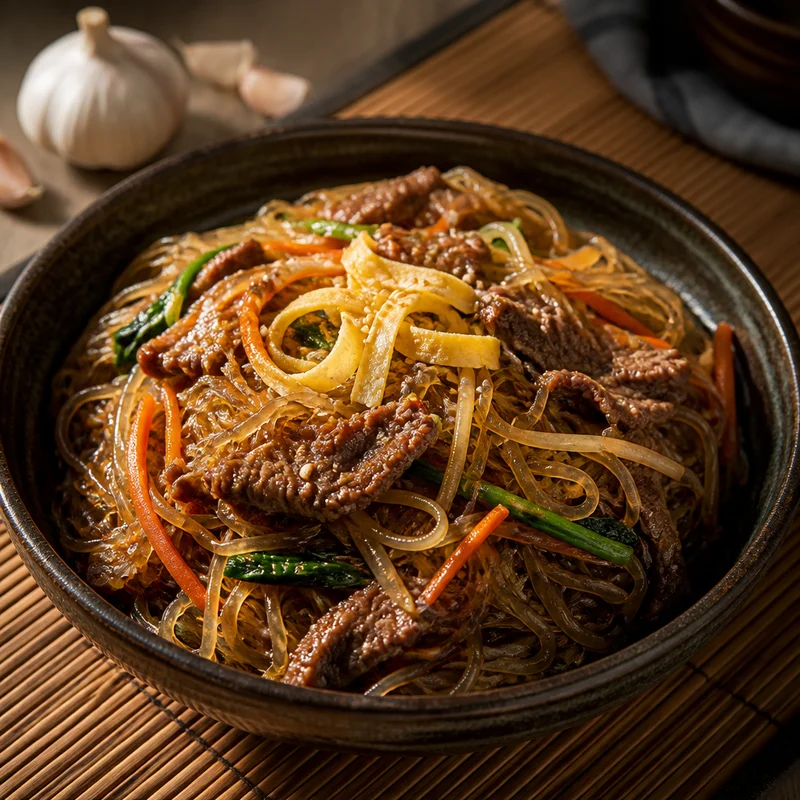
Korean sweet potato starch noodles boiled just to a springy chew, then tossed while still hot with a soy-sesame sauce so every strand drinks it in instead of gluing together. Each vegetable gets its own quick turn in the pan, and thin-sliced beef marinated in soy, garlic and sesame goes in last so it stays tender. Serve warm or at room temperature.
Ingredients
Beef and marinade
- 10 oz beef sirloin or ribeye, sliced 1/8-inch thick against the grain
- 1 tbsp soy sauce
- 2 tsp toasted sesame oil
- 2 tsp granulated sugar
- 2 cloves garlic, finely grated
- 1 tsp mirin or dry sherry
- 1/4 tsp black pepper
Noodles and sauce
- 8 oz Korean sweet potato glass noodles (dangmyeon)
- 5 tbsp soy sauce
- 3 tbsp granulated sugar
- 2 tbsp toasted sesame oil
- 1 tbsp water or beef broth
- 1 clove garlic, finely grated
Vegetables
- 1 medium yellow onion, sliced 1/4-inch thick
- 1 medium carrot, cut into 2-inch matchsticks
- 1 medium red bell pepper, sliced thin
- 5 oz fresh shiitake or cremini mushrooms, stemmed and sliced
- 4 oz fresh spinach
- 4 scallions, cut into 2-inch lengths
- 3 tbsp neutral oil, for the pan
- kosher salt
To finish
- 1 large egg (optional, for garnish)
- 1 tbsp toasted sesame seeds
- 1 tsp toasted sesame oil, for finishing
Vegetables
Instructions
- Toss the sliced beef with 1 tablespoon soy sauce, 2 teaspoons sesame oil, 2 teaspoons sugar, the grated garlic, mirin and black pepper. Cover and refrigerate at least 20 minutes while you prep everything else (up to 4 hours).
- Whisk the sauce: 5 tablespoons soy sauce, 3 tablespoons sugar, 2 tablespoons sesame oil, 1 tablespoon water or broth, and 1 grated garlic clove. Stir until the sugar dissolves. Set aside — this is what the hot noodles will absorb.
- Bring 3 quarts of water to a rolling boil. Add the spinach and blanch 30 seconds, just until wilted. Scoop it out into a colander, rinse under cold water, then squeeze firmly into a ball to remove as much water as you can. Pull the ball apart, chop roughly, and season with a pinch of salt and a few drops of sesame oil. Keep the water boiling.
- Add the glass noodles to the same boiling water and cook 6 to 7 minutes, stirring often so they don't stick, until they are translucent and springy with no chalky core — bite one at 6 minutes. They should be chewy, not soft; overcooked dangmyeon turns gummy and stops absorbing sauce. Drain but do not rinse.
- Immediately transfer the hot drained noodles to your largest bowl and pour over about two-thirds of the sauce. Toss with tongs for a full minute — the noodles will darken from gray to glossy brown as they drink it in. Snip through the pile a few times with kitchen shears so the strands are manageable. Set aside; they'll keep loose as long as they're dressed.
- If making the egg garnish, beat the egg with a pinch of salt. Heat a lightly oiled 8-inch nonstick skillet over low heat, pour in the egg to make a thin sheet, cook 1 to 2 minutes until just set, flip briefly, then slide out, roll up and slice into thin ribbons.
- Heat 1 tablespoon neutral oil in a large skillet or wok over medium-high. Cook the onion with a pinch of salt for 2 minutes until barely translucent, then add to the noodle bowl. Add another teaspoon of oil and cook the carrot 2 minutes until pliable but still crisp; add to the bowl. Repeat with the bell pepper, 1 to 2 minutes.
- Add 1 tablespoon oil to the pan and cook the mushrooms over medium-high, undisturbed for 1 minute, then tossing, 3 to 4 minutes total until browned and their liquid has cooked off. Season with a pinch of salt and add to the bowl.
- Turn the heat to high, add the last tablespoon of oil, and spread the marinated beef in a single layer. Sear 1 minute without moving, then stir-fry 1 to 2 minutes more until just cooked through and lightly caramelized. Add the scallions for the final 30 seconds.
- Scrape the beef, scallions and every drop of pan juices into the bowl. Add the squeezed spinach and the remaining sauce. Toss thoroughly with your hands or tongs for 30 to 60 seconds, lifting from the bottom so the noodles carry the vegetables. Taste and adjust with a splash more soy sauce or a pinch of sugar.
- Finish with 1 teaspoon sesame oil and the sesame seeds, top with egg ribbons if using, and serve warm or at room temperature.
Chef's tips
- Look for dangmyeon in the noodle aisle of a Korean or pan-Asian market — the packages are usually 500g bundles of thick gray-brown strands. Mung bean vermicelli is not a substitute; it's far thinner and turns to mush.
- Dressing the noodles while they're still steaming is the whole trick. Cold noodles seize into a solid clump and the sauce just slides off.
- If your skillet isn't large enough to hold everything at the end, do the final toss in a big mixing bowl instead — it's easier and you won't overcook the vegetables.
- Ask the butcher to slice the beef thin for hot pot or bulgogi, or freeze the steak for 30 minutes before slicing it yourself against the grain.
- Leftovers keep 3 days refrigerated. Revive with a teaspoon of water and a 30-second microwave, or eat cold — japchae is genuinely good straight from the fridge.
Nutrition (per serving, estimated)
587calories
24gprotein
75gcarbs
22gfat
Estimates only — values vary with brands and portions.
Made with Sprig
Japchae with Marinated Beef and Glass Noodles was created in Sprig — the AI chef that turns any craving into a complete recipe, plans your week, and shops with one smart list.
Free to start · 14-day Pro trial · cancel anytime
Not ready yet? Get the occasional recipe worth cooking — a couple a month at most.
You're on the list — check your inbox!
Unsubscribe anytime. Privacy Policy
More from Sprig Originals
Are you this recipe's original author or publisher? Report a problem