Sprig Originals's kitchen / Grilled Whole Branzino with Ladolemono
Grilled Whole Branzino with Ladolemono
 By Sprig Originals · cooked up in Sprig
Worked out from this recipe's ingredients. If you're cooking for an allergy, always read the full ingredient list.
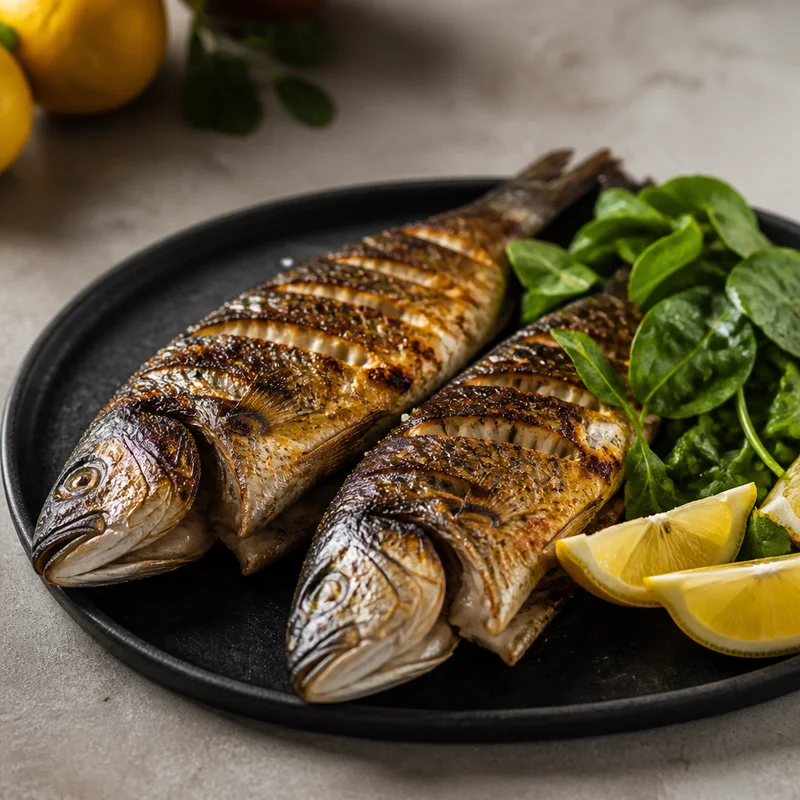
Two whole branzino, scored and rubbed with olive oil, cooked hard over a grill (or under a broiler) until the skin blisters and the flesh slides off the bone. A whisked lemon-and-olive-oil ladolemono goes on the second it leaves the heat, and a 30-second filleting move gets clean, bone-free portions onto the plate. This is the $40 taverna entrée that costs about a third of that at home.
Ingredients
The Fish
- 2 whole branzino (about 1 to 1 1/4 lb each), scaled and gutted
- 1 tbsp kosher salt, plus more for finishing
- 1/2 tsp freshly ground black pepper
- 3 tbsp extra-virgin olive oil
- 1 lemon, sliced into thin rounds
- 6 sprigs fresh oregano or thyme
- 8 sprigs fresh flat-leaf parsley
- 2 cloves garlic, smashed and halved
- neutral oil, for the grill grates
Ladolemono
- 1/3 cup extra-virgin olive oil (use your best)
- 3 tbsp fresh lemon juice
- 1/2 tsp finely grated lemon zest
- 1 tsp dried Greek oregano, crumbled
- 1 small clove garlic, grated (optional)
- 1/2 tsp kosher salt
- 1/4 tsp black pepper
- 1 tbsp chopped fresh parsley
To Serve
- 1 lemon, cut into wedges
- 2 cups wild greens, spinach, or dandelion greens, boiled and dressed with oil and lemon (horta)
- flaky sea salt
- capers or thinly sliced red onion, optional
Instructions
- Pull the fish out of the fridge 20 minutes before cooking. Rinse each branzino inside and out, then dry it aggressively — paper towels inside the cavity and along both flanks. Dry skin is the whole game; wet skin steams and sticks.
- Run your fingertips head-to-tail along the fish to check for missed scales, and snip off the sharp dorsal fin with kitchen shears if you like. With a sharp knife, cut 3 diagonal slashes about 1/4 inch deep through the skin on each side, spacing them evenly from behind the gills to the tail. This helps the thick shoulder cook at the same rate as the thin belly.
- Season both fish all over and inside the cavity with the 1 tablespoon kosher salt and the pepper, working salt into the slashes. Stuff each cavity with lemon rounds, 3 sprigs oregano, 4 sprigs parsley, and 2 pieces of garlic — pack it in but don't force the belly open. Rub the outside with the 3 tablespoons olive oil.
- Make the ladolemono: in a jar, combine the 1/3 cup olive oil, lemon juice, zest, dried oregano, grated garlic if using, 1/2 teaspoon salt, and pepper. Seal and shake hard for 20 seconds until it thickens and turns opaque. Stir in the parsley just before serving. Do not refrigerate; you want it at room temperature.
- TO GRILL: Heat a gas grill to high (about 500°F) or build a hot charcoal bed and let it burn down to glowing coals with light ash. Scrub the grates clean, then oil them: fold a paper towel into a pad, dip it in neutral oil, and wipe the bars 3 or 4 times with tongs until they look glossy.
- Lay the fish on the grate at a diagonal to the bars, close the lid, and cook 6 to 7 minutes without touching them. Test the release by nudging one fish with a thin metal spatula — if it lifts freely, it's ready to turn; if it grips, give it another 60 seconds. Slide the spatula fully under and flip in one confident motion, using tongs at the tail for support. Grill 5 to 7 minutes more.
- TO ROAST INSTEAD: Heat the oven to 450°F with a rimmed sheet pan inside for 10 minutes. Set the fish on the preheated pan (it will sizzle) and roast 16 to 18 minutes, then run it under the broiler for 2 minutes to blister the skin. No flipping needed.
- The fish is done when the thickest part behind the head reads 130 to 135°F on an instant-read thermometer, or when a paring knife slipped along the backbone shows opaque flesh that separates from the bone with no resistance. The eye will be white and the dorsal fin should pull out easily.
- Move the fish to a warm platter and spoon a third of the ladolemono over them immediately — hot skin drinks it up. Rest 3 minutes.
- Fillet at the table: cut just behind the head down to the backbone, then run the knife tip along the top of the spine from head to tail. Slide a spoon or fish knife between the top fillet and the ribs and lift the whole fillet off in one piece, folding it onto the plate. Grab the tail and lift the entire skeleton up and away from the bottom fillet — it should come out in one clean sheet. Discard the herbs and check for the row of pin bones along the belly flap.
- Plate the fillets skin side up, spoon more ladolemono over each, finish with flaky salt, and serve with lemon wedges and the dressed greens alongside. Pass the remaining ladolemono in a small bowl.
Chef's tips
- Ask the fish counter to scale, gut, and trim the fins for you — say you're cooking it whole, so they leave the head and tail on. A branzino should smell like clean seawater and nothing else; the eyes should be clear and domed, not sunken.
- Two 1-pound fish feed two people generously. If you can only find a single 2-pound fish, add about 6 minutes to the total cook time and go by the 130 to 135°F reading rather than the clock.
- If you're nervous about sticking, cook the fish in a hinged grill basket or on a bed of thin lemon slices laid directly on the grate — the citrus acts as a nonstick raft and perfumes the skin.
- Shake the ladolemono again right before it hits the fish; it separates within a few minutes, and the emulsified version clings much better.
- Save the picked skeleton, head, and tail — simmered 25 minutes with an onion, a bay leaf, and a splash of white wine, they make an excellent fish broth for kakavia or risotto.
Nutrition (per serving, estimated)
850calories
48gprotein
9gcarbs
68gfat
Estimates only — values vary with brands and portions.
Made with Sprig
Grilled Whole Branzino with Ladolemono was created in Sprig — the AI chef that turns any craving into a complete recipe, plans your week, and shops with one smart list.
Free to start · 14-day Pro trial · cancel anytime
Not ready yet? Get the occasional recipe worth cooking — a couple a month at most.
You're on the list — check your inbox!
Unsubscribe anytime. Privacy Policy
More from Sprig Originals
Are you this recipe's original author or publisher? Report a problem