Sprig Originals's kitchen / Lemon Drizzle Bundt Cake with a Double Lemon Soak
Lemon Drizzle Bundt Cake with a Double Lemon Soak
 By Sprig Originals · cooked up in Sprig
Worked out from this recipe's ingredients. If you're cooking for an allergy, always read the full ingredient list.
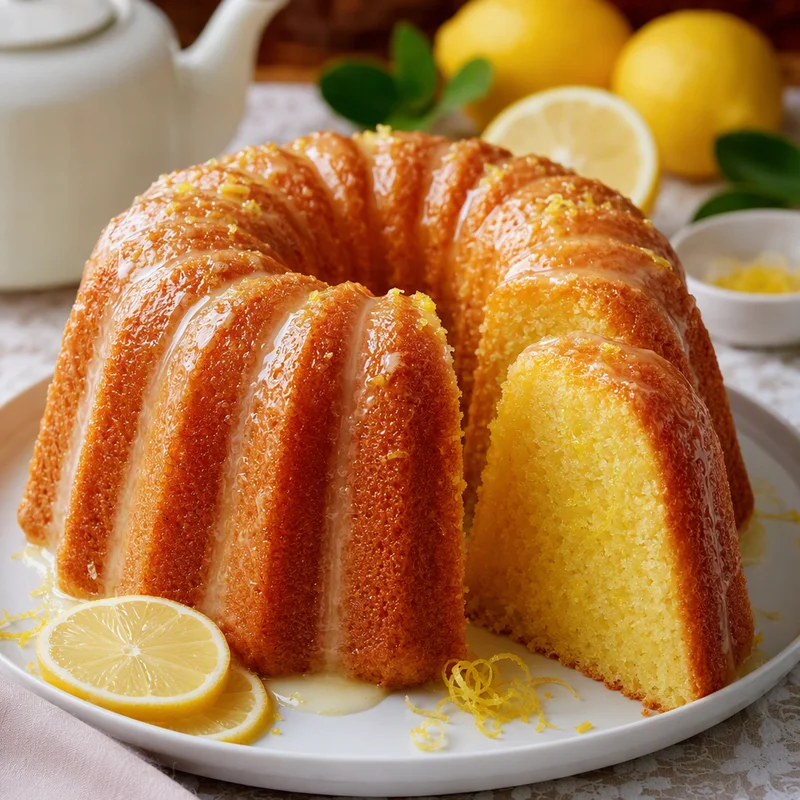
The British teatime classic, scaled up into a tall, fluted bundt. A sour cream batter perfumed with the zest of four lemons gets skewered hot from the oven and fed twice with warm lemon syrup, so the crumb stays damp for days. A thick, opaque lemon glaze poured over the top sets into a sweet-tart shell that cracks under the knife. Assertively lemony, deliberately not subtle.
Ingredients
Cake
- 1 tbsp softened butter, for the pan
- 2 tbsp all-purpose flour, for the pan
- 4 large lemons (for about 3 tbsp packed zest and 3/4 cup juice total, used throughout)
- 2 cups granulated sugar
- 1 cup unsalted butter, softened to 65°F
- 4 large eggs, room temperature
- 3 cups all-purpose flour (360 g), spooned and leveled
- 1 1/2 tsp baking powder
- 1/2 tsp baking soda
- 1 tsp fine sea salt
- 1 cup full-fat sour cream
- 3 tbsp fresh lemon juice
- 2 tsp vanilla extract
Lemon Soaking Syrup
- 1/2 cup fresh lemon juice
- 1/2 cup granulated sugar
- 1 pinch fine sea salt
Lemon Glaze
- 2 cups powdered sugar, sifted
- 3 tbsp fresh lemon juice, plus more as needed
- 1 tsp finely grated lemon zest
- 1 pinch fine sea salt
Instructions
- Heat the oven to 350°F with a rack in the lower third. Using a pastry brush, paint every crevice of a 10- to 12-cup bundt pan with the softened butter, then add the 2 tablespoons flour, rotate and tap the pan to coat completely, and knock out the excess. Be thorough — fluted pans are unforgiving.
- Zest all 4 lemons onto a plate; you want about 3 tablespoons packed zest. Juice the lemons and measure out what you need: 3 tablespoons for the batter, 1/2 cup for the syrup, and 3 tablespoons for the glaze (about 3/4 cup total). Reserve 1 teaspoon of zest for the glaze.
- Put the granulated sugar and the remaining zest in a large bowl and rub them together with your fingertips for 30 seconds, until the sugar is damp, pale yellow and smells like a lemon grove. This releases far more oil than simply stirring the zest in.
- Add the 1 cup softened butter to the lemon sugar and beat with a stand mixer (paddle) or hand mixer on medium-high for 4 to 5 minutes, scraping down twice, until very pale and fluffy. Add the eggs one at a time, beating 30 seconds after each and scraping the bowl; if the mixture looks curdled, keep beating — it will come back together.
- Whisk the 3 cups flour, baking powder, baking soda and 1 teaspoon salt together in a second bowl. In a measuring cup, stir the sour cream with the 3 tablespoons lemon juice and the vanilla.
- On low speed, add the flour mixture in three additions alternating with the sour cream mixture in two, mixing only until each addition disappears. Stop while a few streaks of flour remain and finish by hand with a spatula — the batter should be thick and mound on the spatula. Overmixing here gives you a tough, tight crumb.
- Scrape the batter into the pan, spreading it evenly and pushing it slightly up the sides so the center dips a little. Rap the pan firmly on the counter 5 times to pop large air pockets.
- Bake 55 to 65 minutes, until the cake is deep golden, springs back when pressed, and a thin skewer inserted into the thickest part comes out with no wet batter. If your oven runs hot, tent loosely with foil at 45 minutes.
- While the cake bakes, make the syrup: combine the 1/2 cup lemon juice, 1/2 cup sugar and pinch of salt in a small saucepan over medium heat. Stir just until the sugar dissolves and the syrup is steaming — do not let it boil down. Keep warm.
- First soak: as soon as the cake comes out, set the pan on a rack and pierce the exposed bottom surface all over, 40 to 50 times, with a thin skewer, going about two-thirds of the way down. Spoon half the warm syrup slowly over the surface, pausing to let it disappear. Let the cake sit in the pan for 20 minutes.
- Second soak: lay a rack over the pan and invert to release the cake (give a firm shake if needed). Set the rack over a rimmed baking sheet and brush or spoon the remaining warm syrup over the top and sides of the still-warm cake. Cool completely, at least 90 minutes — glazing a warm cake gives you a translucent puddle instead of a shell.
- Make the glaze: whisk the sifted powdered sugar, 3 tablespoons lemon juice, reserved 1 teaspoon zest and pinch of salt until smooth and opaque. It should fall from the whisk in a thick, slow ribbon that holds its line for a second; add lemon juice 1/2 teaspoon at a time to loosen, or more powdered sugar to thicken.
- Pour the glaze over the crown of the cooled cake in a steady stream, letting it break over the ridges and run down in thick drips. Let it set at room temperature for 30 minutes, until dry to the touch, then slice with a serrated knife.
Chef's tips
- Zest before you juice, and only take the yellow — the white pith underneath turns the cake bitter. A Microplane and a light hand are your friends here.
- The double soak is the whole point: syrup goes on hot from the oven (when the crumb is thirstiest) and again while warm after unmolding, so the moisture reaches the center instead of pooling on the surface.
- This cake is better on day two. Keep it under a cake dome or loosely covered at room temperature for up to 4 days; refrigerating dulls the lemon and dries the crumb.
- No bundt pan? Divide the batter between two 8 1/2 x 4 1/2-inch loaf pans and bake 50 to 55 minutes at 350°F, or use a 9x13-inch pan for 35 to 40 minutes, halving the skewering pattern per cake.
- For a lemon-and-thyme version, steep 4 thyme sprigs in the warm syrup for 10 minutes and strain them out before soaking. A pinch of finely crushed lemon zest and flaky salt scattered over the wet glaze also looks and tastes great.
Nutrition (per serving, estimated)
598calories
6gprotein
96gcarbs
23gfat
Estimates only — values vary with brands and portions.
Made with Sprig
Lemon Drizzle Bundt Cake with a Double Lemon Soak was created in Sprig — the AI chef that turns any craving into a complete recipe, plans your week, and shops with one smart list.
Free to start · 14-day Pro trial · cancel anytime
Not ready yet? Get the occasional recipe worth cooking — a couple a month at most.
You're on the list — check your inbox!
Unsubscribe anytime. Privacy Policy
More from Sprig Originals
Frozen Chocolate–Caramel Peanut Nougat Bars
Blueberry Peach Buckle with Almond Streusel
Creole Cream Cheese Cheesecake with Salted Caramel and Dark Chocolate
Are you this recipe's original author or publisher? Report a problem