Tiramisu Cheesecake with Espresso-Soaked Ladyfinger Base
 By Sprig Originals · cooked up in Sprig
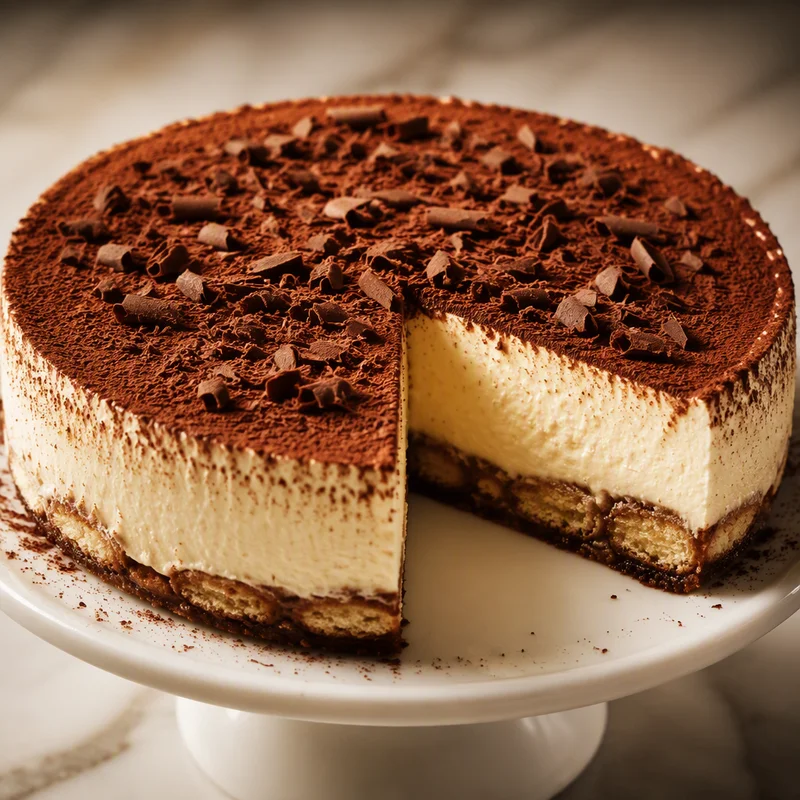
A dessert-course showstopper that fuses two icons: crisp Italian savoiardi soaked in dark espresso and Marsala, pressed under a dense, silky mascarpone–cream cheese custard. The water-bath bake keeps the top crack-free and the texture set-but-creamy, and an overnight chill is what lets it cut into tall, clean slices. Finished with billowy mascarpone cream, a heavy veil of cocoa, and shaved dark chocolate — the kind of plated dessert that carries a very grown-up price tag on a restaurant menu.
Ingredients
- 3/4 cup hot strong brewed espresso or very strong coffee
- 2 tablespoons granulated sugar
- 2 tablespoons dark rum or Marsala wine
- 7 oz crisp Italian ladyfingers (savoiardi), about 24 cookies
- 2 tablespoons granulated sugar
- 1 pinch fine sea salt
- 5 tablespoons unsalted butter, melted
- 24 oz full-fat block cream cheese, room temperature
- 16 oz mascarpone, room temperature
- 1 1/4 cups granulated sugar
- 2 tablespoons cornstarch
- 1/2 teaspoon fine sea salt
- 4 large eggs, room temperature
- 1 large egg yolk, room temperature
- 1/3 cup heavy cream, room temperature
- 2 teaspoons vanilla extract
- 1 tablespoon dark rum or Marsala wine
- 2 teaspoons instant espresso powder
- 1 cup heavy cream, cold
- 1/2 cup mascarpone, cold
- 3 tablespoons powdered sugar
- 1/2 teaspoon vanilla extract
- 2 tablespoons unsweetened cocoa powder, for dusting
- 1 oz bittersweet chocolate, for shaving
Instructions
- Set up first: pull the cream cheese, mascarpone, eggs, and cream out at least 90 minutes ahead — cold dairy is the #1 cause of lumpy batter and cracked tops. Heat the oven to 350°F. Stir the hot espresso with 2 tablespoons sugar until dissolved, add the rum, and set aside to cool to room temperature.
- Line the bottom of a 9-inch springform pan with parchment, clamp the ring on, and grease the sides lightly. Wrap the outside of the pan in two overlapping sheets of heavy-duty foil, pressing them snugly up the sides to just below the rim so no water can seep in.
- Set aside 12 whole ladyfingers for the soaked layer. Put the rest (about 4 oz) in a food processor with 2 tablespoons sugar and the pinch of salt and blitz to fine crumbs, about 30 seconds. Drizzle in the melted butter and pulse until the crumbs clump when squeezed.
- Press the crumbs firmly into an even layer over the bottom only of the pan, using the flat bottom of a measuring cup to compact them. Bake 10 minutes at 350°F, then cool on a rack for 15 minutes. Reduce the oven to 325°F.
- Working one at a time, dip the 12 reserved ladyfingers in the cooled espresso soak for 2 seconds per side — a fast in-and-out, no soaking — and lay them over the baked crust in a single tight layer, snapping pieces to fill gaps. Brush any remaining soak over the top; the layer should be damp, not swimming.
- Make the filling with the mixer on LOW the entire time to avoid whipping in air. Beat the cream cheese alone for 2 minutes until perfectly smooth, scraping the bowl and paddle twice. Add the mascarpone and beat just 30 seconds more — mascarpone breaks if overworked.
- Whisk the sugar, cornstarch, and salt together, then add to the bowl and beat on low for 1 minute until glossy. Scrape down thoroughly.
- Add the eggs one at a time, then the yolk, beating only 15 to 20 seconds after each and scraping the bowl between additions. Mix in the heavy cream and vanilla on the lowest speed until the batter is smooth and pourable, about 20 seconds. Do not beat further.
- Transfer 1 1/2 cups of the batter to a small bowl. Stir the rum and espresso powder together until dissolved, then whisk into that portion to make the coffee batter.
- Pour the plain batter over the ladyfingers, easing it in with a spatula so you don't dislodge the cookies. Spoon the coffee batter over the surface in dollops and drag a butter knife through in 6 to 8 lazy figure-eights for a marble. Tap the pan gently on the counter to release bubbles.
- Set the foil-wrapped pan in a large roasting pan, slide it onto the middle oven rack, and pour boiling water into the roasting pan until it reaches halfway up the springform. Bake at 325°F for 75 to 90 minutes: the outer 2 inches should be set and matte, the center 3 inches should still wobble as one soft unit, and an instant-read thermometer 1 inch from the edge should read 150°F.
- Turn the oven off, crack the door 4 inches, and let the cheesecake cool in the water bath for 1 hour — this slow drop is what prevents cracks and sinking. Lift the pan out, peel off the foil, dry the outside, and cool on a rack to room temperature, about 1 1/2 hours.
- Cover the pan loosely with foil (don't let it touch the surface) and refrigerate at least 8 hours, preferably 24. This overnight set is non-negotiable: it's the difference between a scoopable cheesecake and clean, tall restaurant slices.
- To unmold, run a thin knife dipped in hot water around the inside of the ring, then release the clamp and lift the ring straight up. Slide the cake off the parchment onto a serving plate.
- Whip the cold cream, mascarpone, powdered sugar, and vanilla on medium speed to firm peaks, 1 to 2 minutes — stop the moment it holds a shape. Spread or pipe over the chilled cheesecake, dust generously with cocoa through a fine sieve, and shave bittersweet chocolate over the top.
- Slice with a long thin knife dipped in hot water and wiped dry between every cut. Serve cold, straight from the fridge.
Chef's tips
- No heavy-duty foil? Skip the wrap and set the springform inside a 10-inch cake pan, then put that in the water bath — a pan-in-pan barrier is more reliable than thin foil.
- Sponge-style soft ladyfingers turn to paste in the espresso soak. Look for crisp, dry savoiardi in the Italian or cookie aisle; if that's all you can find, dip them for 1 second only.
- No espresso machine: dissolve 2 tablespoons instant espresso powder in 3/4 cup hot water for the soak. For a kid-friendly cake, use decaf and swap the rum for 1 teaspoon vanilla.
- If your batter looks even slightly lumpy before the eggs go in, keep beating the cream cheese on low — lumps never disappear later, they bake into the slice.
- The cheesecake keeps 5 days covered in the fridge, but add the mascarpone cream and cocoa within a few hours of serving so the topping stays fluffy and the cocoa stays dry.
- Freeze the unfrosted cheesecake whole (or in slices) wrapped tightly for up to 2 months; thaw overnight in the refrigerator.
Nutrition (per serving, estimated)
Made with Sprig
Tiramisu Cheesecake with Espresso-Soaked Ladyfinger Base was created in Sprig — the AI chef that turns any craving into a complete recipe, plans your week, and shops with one smart list.
More from Sprig Originals
Are you this recipe's original author or publisher? Report a problem