Sprig Originals's kitchen / Milk Powder Gulab Jamun in Cardamom-Rose Syrup
Milk Powder Gulab Jamun in Cardamom-Rose Syrup
 By Sprig Originals · cooked up in Sprig
Worked out from this recipe's ingredients. If you're cooking for an allergy, always read the full ingredient list.
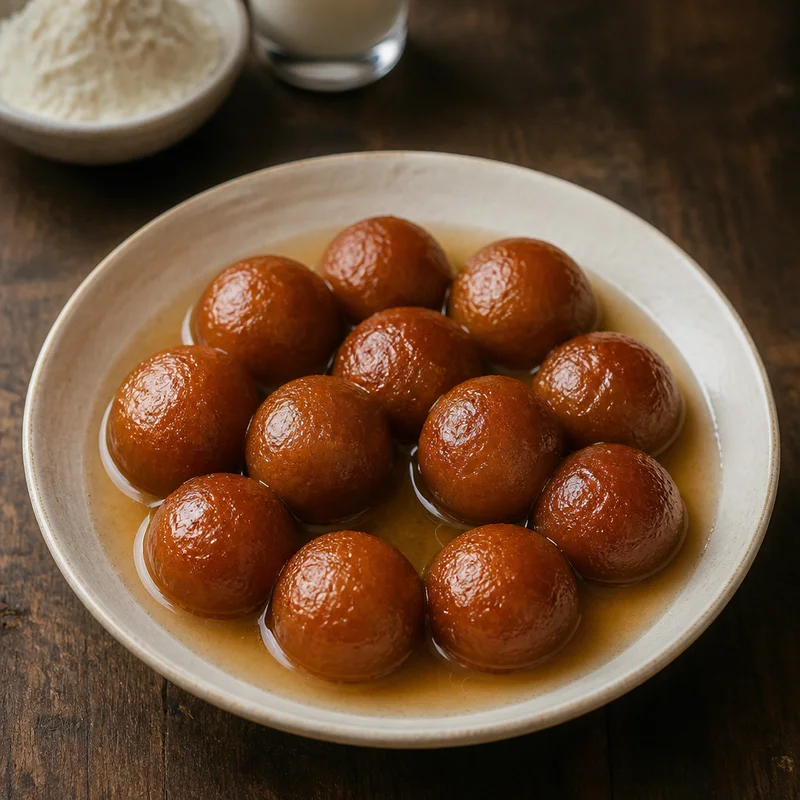
Golden, syrup-soaked milk dumplings made without hunting down khoya — full-fat milk powder does the work. The secret is frying low and slow at 275–300°F so the centers cook through and stay spongy while the outsides turn an even mahogany brown, then letting them drink warm cardamom-rose syrup for a few hours.
Ingredients
Cardamom-Rose Syrup
- 1 1/2 cups granulated sugar
- 1 1/2 cups water
- 5 green cardamom pods, lightly crushed
- 1 pinch saffron threads (optional)
- 1 tsp lemon juice
- 1 tsp rose water
Jamun Dough
- 1 cup full-fat (whole) milk powder, about 120 g
- 1/4 cup all-purpose flour
- 1 tbsp fine semolina (sooji), optional
- 1/4 tsp baking soda
- 1/4 tsp ground cardamom
- 2 tbsp ghee, melted
- 4 tbsp whole milk, plus more as needed
For Frying and Garnish
- 3 cups ghee or neutral oil, for frying
- 2 tbsp slivered pistachios
- 1 pinch dried rose petals (optional)
Instructions
- Make the syrup first so it has time to be warm, not hot, when the jamun go in: combine the sugar, water, crushed cardamom pods, and saffron in a wide saucepan (at least 3-quart, so the finished jamun have room to swell). Bring to a boil over medium-high heat, stirring until the sugar dissolves, then simmer 5 minutes. It should be thin and syrupy — do not let it reach thread consistency or the jamun will not absorb it. Stir in the lemon juice, turn off the heat, and stir in the rose water. Keep covered and warm.
- Whisk the milk powder, flour, semolina, baking soda, and ground cardamom together in a bowl, breaking up any lumps in the milk powder with your fingers. Drizzle in the melted ghee and rub it through with your fingertips until the mixture looks like damp sand.
- Add 3 tablespoons of the milk and gather the mixture with a light hand — do not knead. Add the remaining milk a teaspoon at a time until you have a soft, smooth, slightly tacky dough that just holds together, like fresh play dough. It should be softer than cookie dough. Cover and rest 10 minutes so the milk powder hydrates; if it stiffens too much, work in a few more drops of milk.
- Divide the dough into 16 pieces (about 12 g each). Roll each between your palms with a little ghee on your hands into a perfectly smooth crack-free ball, slightly smaller than a walnut — they will nearly double. Any crack or seam will split open in the oil, so re-roll until glassy smooth. Keep the balls covered with a damp towel.
- Heat the ghee or oil in a deep, wide pan (about 2 inches deep) over medium-low to 275–300°F on a thermometer. This is the whole trick: at this temperature a dropped ball should sink, then float up slowly after 25–30 seconds. If it browns in under a minute the oil is too hot and the centers will stay raw and hard.
- Slide in 5 or 6 balls at a time, leaving room. Do not touch them for the first minute. Then keep them moving gently with a slotted spoon or by swirling the oil, so they color evenly on all sides. Fry 8 to 10 minutes total, holding the oil at 275–300°F, until they are a deep, even reddish-brown all over. Pale patches mean undercooked dough; take them further than feels comfortable.
- Lift the jamun out, let them drip for 10 seconds, and slide them directly into the warm (not boiling) syrup. Let the oil come back up to temperature between batches and repeat with the remaining balls.
- Once all the jamun are in the syrup, set the pan over the lowest heat for 3 to 4 minutes just to warm through, then turn it off, cover, and let them soak at least 2 hours and up to overnight at room temperature. They will swell, soften, and turn spongy all the way to the center.
- Serve warm or at room temperature, 2 per person with a spoonful of syrup, topped with slivered pistachios and rose petals. To rewarm, microwave a bowl of jamun with syrup for 20 to 30 seconds.
Chef's tips
- Test one ball first. Fry a single jamun, cut it open, and look at the center: if it is dense and raw-tasting, lower the heat and fry the rest longer. If it collapsed or split, your dough was too wet or over-kneaded — add a teaspoon of milk powder.
- Syrup temperature matters as much as oil temperature. Boiling-hot syrup shocks the jamun and can make them shrink and turn rubbery; cold syrup will not penetrate. Warm to the touch is right.
- Use full-fat milk powder, not nonfat. Nonfat milk powder makes tough, chalky jamun that resist syrup.
- Roll with ghee-slicked palms and inspect each ball against the light. One hairline crack is enough to let a jamun burst in the oil and cloud the fat.
- Ghee gives the most authentic flavor; if that is a lot of ghee, fry in neutral oil and stir 2 tablespoons of melted ghee into the finished syrup instead.
- They are better on day two. Made ahead, they keep 3 days covered at room temperature or 5 days refrigerated in their syrup.
Nutrition (per serving, estimated)
306calories
5gprotein
37gcarbs
15gfat
Estimates only — values vary with brands and portions.
Made with Sprig
Milk Powder Gulab Jamun in Cardamom-Rose Syrup was created in Sprig — the AI chef that turns any craving into a complete recipe, plans your week, and shops with one smart list.
Free to start · 14-day Pro trial · cancel anytime
Not ready yet? Get the occasional recipe worth cooking — a couple a month at most.
You're on the list — check your inbox!
Unsubscribe anytime. Privacy Policy
More from Sprig Originals
Frozen Chocolate–Caramel Peanut Nougat Bars
Blueberry Peach Buckle with Almond Streusel
Creole Cream Cheese Cheesecake with Salted Caramel and Dark Chocolate
Are you this recipe's original author or publisher? Report a problem