Sprig Originals's kitchen / Stovetop Crema Catalana with a Broiler-Torched Sugar Crust
Stovetop Crema Catalana with a Broiler-Torched Sugar Crust
 By Sprig Originals · cooked up in Sprig
Worked out from this recipe's ingredients. If you're cooking for an allergy, always read the full ingredient list.
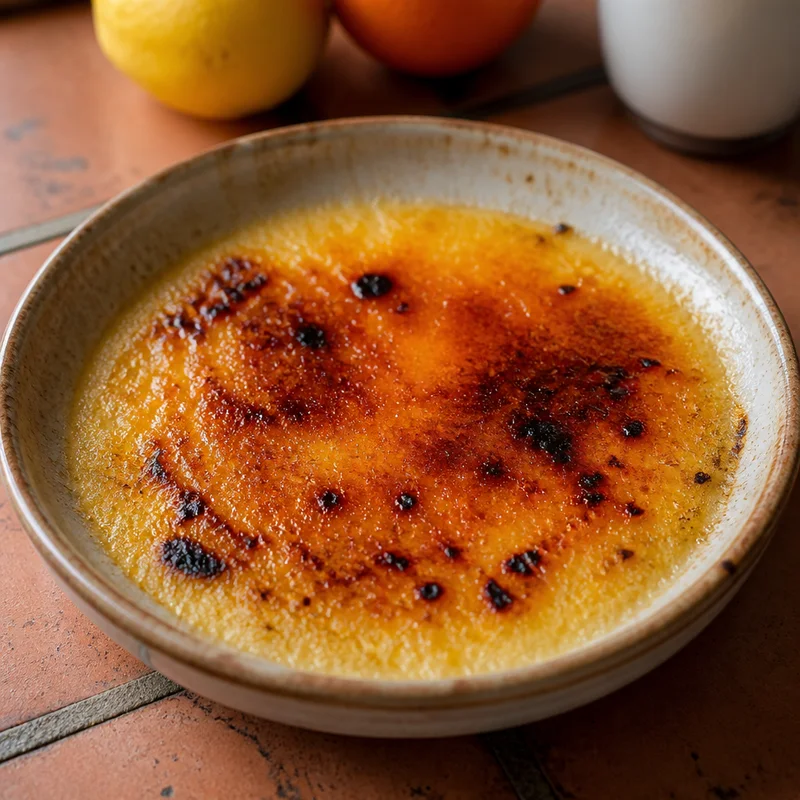
Spain's answer to crème brûlée, and honestly the easier one: no water bath, no oven-baked custard, no cracked surfaces. Whole milk is infused with cinnamon and strips of lemon and orange peel, then thickened on the stovetop with egg yolks and a little cornstarch until it's silky enough to coat a spoon. It sets firm in the fridge in a few hours, and the shattery caramel top comes together under a hot broiler if you don't own a torch.
Ingredients
Infused Milk
- 3 cups whole milk
- 1 cinnamon stick
- 1 lemon, peel removed in wide strips
- 1/2 orange, peel removed in wide strips
Custard
- 6 large egg yolks
- 2/3 cup granulated sugar
- 3 tbsp cornstarch
- 1/4 tsp fine sea salt
- 1/2 tsp vanilla extract
Caramel Top
- 6 tsp granulated sugar (1 tsp per ramekin)
- 2 tsp turbinado or raw sugar, optional for extra crunch
Instructions
- Use a vegetable peeler to remove the peel from the lemon and half the orange in wide strips, taking as little white pith as possible. Set out six shallow 4- to 5-ounce ramekins or a similar set of wide, low dishes — shallow and wide gives you the best ratio of caramel to custard.
- Pour 2 1/2 cups of the milk into a medium saucepan and add the cinnamon stick and the citrus peels. Warm over medium heat until small bubbles ring the edge and steam rises, about 5 minutes; do not boil. Remove from the heat, cover, and steep 15 minutes.
- Meanwhile, whisk the egg yolks, 2/3 cup sugar, cornstarch, and salt in a bowl until pale and thick. Whisk in the remaining 1/2 cup cold milk until completely smooth with no cornstarch lumps at the bottom.
- Strain the infused milk through a fine-mesh sieve to remove the cinnamon and peels, then return it to the saucepan and rewarm over medium heat until steaming. Ladle about a cup of the hot milk into the yolk mixture in a slow stream while whisking constantly to temper it, then pour that mixture back into the saucepan.
- Cook over medium heat, whisking constantly and scraping the corners of the pan, until the custard thickens noticeably and comes to a lazy bubble, 4 to 7 minutes. Once it bubbles, keep whisking for a full 60 to 90 seconds — this cooks out the raw starch taste and guarantees it will set. It should be thick enough to leave a clear trail when you drag the whisk through it. Off the heat, stir in the vanilla.
- Immediately strain the custard through the fine-mesh sieve into a pitcher or measuring cup to catch any bits of cooked egg, then divide it among the ramekins. Tap each one gently on the counter to settle the surface flat.
- Let the custards cool at room temperature for 30 minutes, then refrigerate uncovered for 30 minutes more (this lets surface steam escape instead of pooling). Cover with plastic wrap pressed lightly to the surface, or leave uncovered if your fridge isn't strongly scented, and chill at least 4 hours or overnight until fully firm.
- To caramelize under the broiler: set an oven rack about 4 inches below the broiler element and preheat the broiler on high for a full 5 minutes. Blot each chilled custard with a paper towel so the top is dry, then sprinkle 1 teaspoon of granulated sugar over each in an even, thin, edge-to-edge layer — tilt and tap to spread it rather than dumping it in the middle. Add a pinch of turbinado on top if you want a thicker crunch.
- Nest the ramekins in a shallow baking pan and pack ice cubes around them (not on them) to keep the custard cold while the tops burn. Broil 2 to 5 minutes, watching the entire time and rotating the pan once, until the sugar melts, bubbles, and turns deep amber with a few dark spots. Pull them the moment they look right — the line between caramel and burnt is about 15 seconds.
- Let the tops set for 2 to 3 minutes at room temperature so the caramel hardens into a sheet, then serve right away while the crust still cracks under a spoon.
- If you have a kitchen torch instead: hold the flame 2 inches above the sugar and move it in slow circles until the surface liquefies and browns, about 45 seconds per ramekin. No ice bath needed.
Chef's tips
- Traditional crema catalana leans on cinnamon and citrus rather than vanilla, and it's thickened with starch instead of set by baking — that's why you can make it entirely on the stovetop in 20 minutes.
- Don't stop whisking once the custard starts to thicken, and get into the corners of the pan. If you do end up with a few lumps, the fine-mesh strainer fixes everything.
- Too much sugar on top will melt into a thick, bitter, glass-hard slab. One level teaspoon per shallow ramekin is genuinely enough.
- Caramelize only right before serving. Within 30 to 40 minutes the moisture from the custard dissolves the crust and you lose the crack.
- Save the egg whites for meringues or an omelette — they freeze well for up to three months in a covered container.
Nutrition (per serving, estimated)
290calories
6gprotein
50gcarbs
8gfat
Estimates only — values vary with brands and portions.
Made with Sprig
Stovetop Crema Catalana with a Broiler-Torched Sugar Crust was created in Sprig — the AI chef that turns any craving into a complete recipe, plans your week, and shops with one smart list.
Free to start · 14-day Pro trial · cancel anytime
Not ready yet? Get the occasional recipe worth cooking — a couple a month at most.
You're on the list — check your inbox!
Unsubscribe anytime. Privacy Policy
More from Sprig Originals
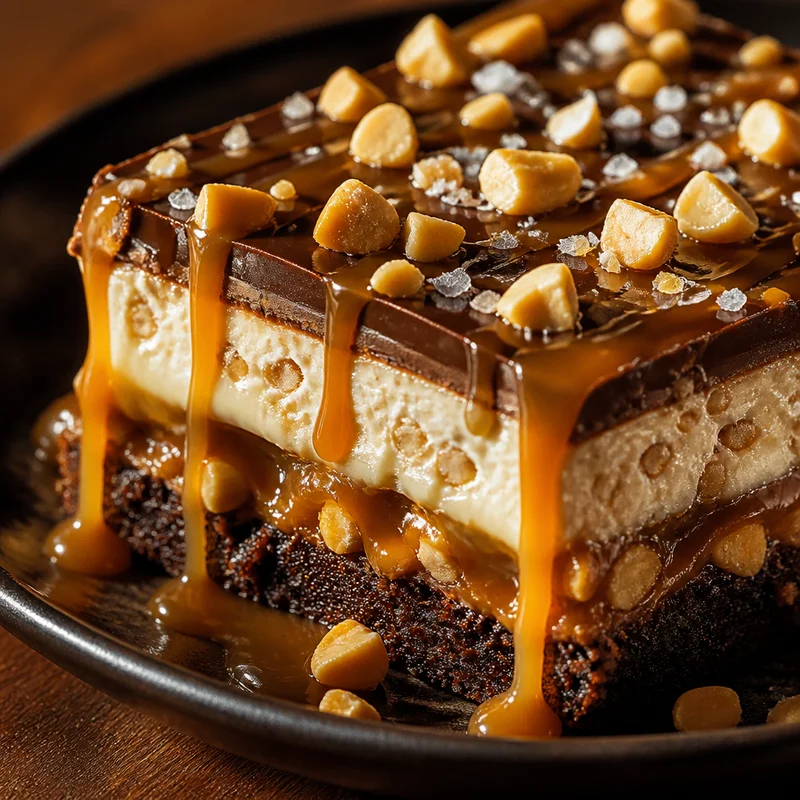
Frozen Chocolate–Caramel Peanut Nougat Bars
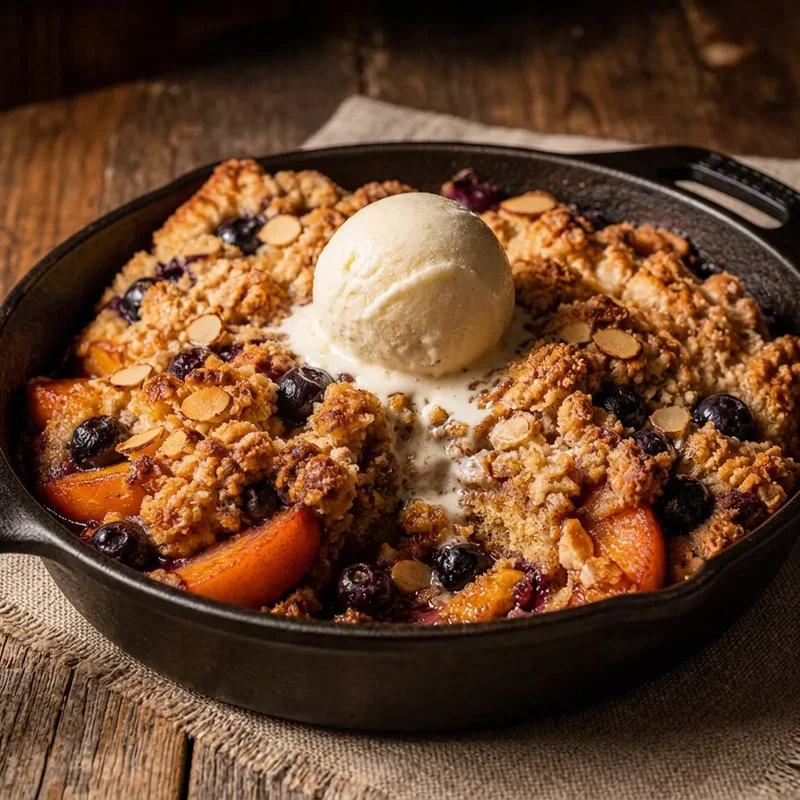
Blueberry Peach Buckle with Almond Streusel
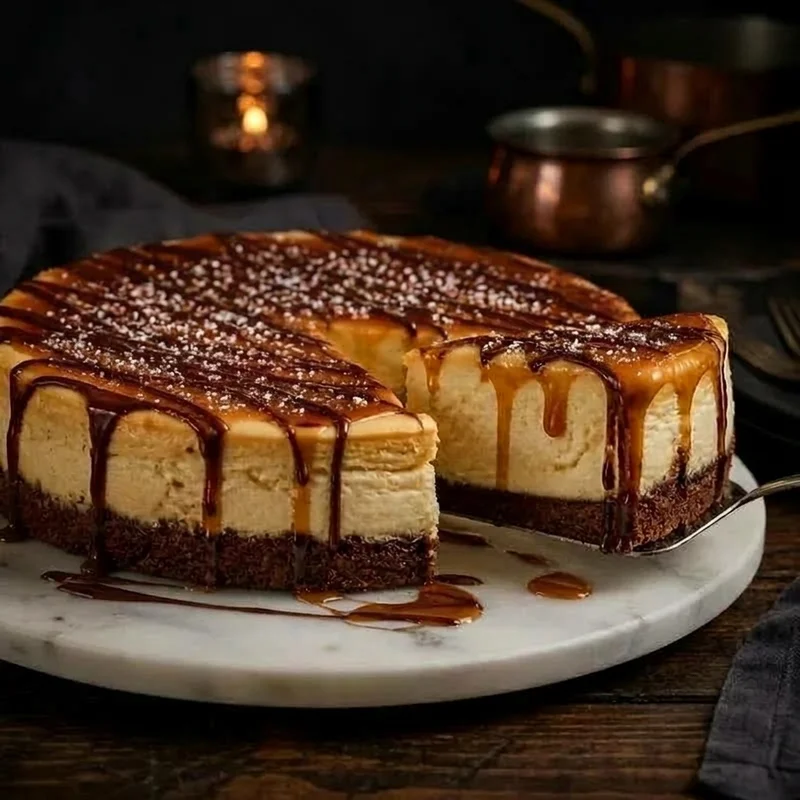
Creole Cream Cheese Cheesecake with Salted Caramel and Dark Chocolate
Are you this recipe's original author or publisher? Report a problem