Sprig Originals's kitchen / Japanese Cotton Cheesecake
Japanese Cotton Cheesecake
 By Sprig Originals · cooked up in Sprig
Worked out from this recipe's ingredients. If you're cooking for an allergy, always read the full ingredient list.
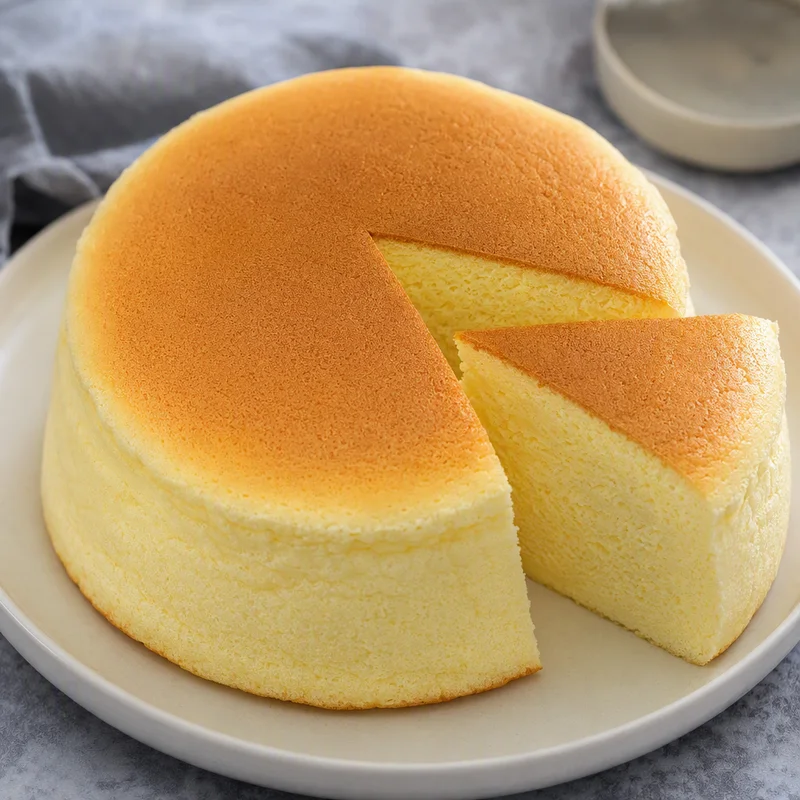
The tall, trembling cheesecake you find in Tokyo bakery windows — somewhere between a soufflé, a chiffon cake and a cheesecake. Warm cream cheese, butter and milk are whisked into a silky custard base, then folded into a soft meringue and baked low and slow in a water bath so it rises high and stays cottony. It's barely sweet, jiggles when you tap the pan, and tastes even better cold the next day.
Ingredients
Cheese custard base
- 8 oz full-fat block cream cheese, cut into cubes
- 4 tbsp unsalted butter
- 1/2 cup whole milk
- 6 large egg yolks
- 1/3 cup cake flour (40 g)
- 3 tbsp cornstarch (24 g)
- 1 tbsp fresh lemon juice
- 1 tsp vanilla extract
- 1/4 tsp fine salt
Meringue
- 6 large egg whites, cold
- 1/2 tsp cream of tartar
- 2/3 cup granulated sugar (135 g)
To finish
- 1 tbsp powdered sugar, for dusting
- 2 tbsp apricot jam plus 1 tsp water, for glazing (optional)
Instructions
- Position a rack in the lower third of the oven and heat to 320°F. Line the bottom of an 8-inch round cake pan (at least 3 inches deep) with parchment, then line the sides with a parchment collar that stands about 2 inches above the rim. Do not grease the sides — the batter needs to grip as it climbs. If you only have a springform, wrap the outside tightly in two layers of heavy foil so no water seeps in. Set the pan inside a large roasting pan and put a kettle of water on to boil.
- Separate the eggs while cold, putting the whites in a large, spotlessly clean metal or glass bowl (refrigerate them until you need them) and the yolks in a small bowl. Sift the cake flour and cornstarch together twice and set aside.
- Combine the cream cheese, butter and milk in a medium heatproof bowl and set it over a saucepan with 1 inch of barely simmering water. Whisk constantly for 4 to 6 minutes, until completely smooth and glossy with no lumps of cheese; the mixture should read 105–115°F. Remove from the heat.
- Whisk the sifted flour and cornstarch into the warm cheese mixture in two additions until perfectly smooth. Whisk in the egg yolks one or two at a time, then the lemon juice, vanilla and salt. Pass the batter through a fine-mesh sieve into a large bowl to catch any lumps. It should be the consistency of thin pancake batter and still pleasantly warm to the touch — around 100°F. Cover loosely and leave at room temperature.
- Beat the cold egg whites with the cream of tartar on medium speed until foamy and opaque, about 1 minute. With the mixer running, add the granulated sugar 1 tablespoon at a time over about 2 minutes, then continue beating on medium (not high) for 3 to 5 minutes to soft-medium peaks: when you lift the whisk, the peak should curl over and flop about halfway. Stop while it still looks smooth and shiny — a stiff, dry meringue will crack the cake.
- Whisk one-third of the meringue into the warm batter to loosen it. Add the second third and fold gently with a large silicone spatula, cutting down the center and sweeping up the side while rotating the bowl. Fold in the last third just until no white streaks remain, no more than 20 to 25 strokes. The batter should be pale, airy and pourable, like melted ice cream.
- Pour the batter into the prepared pan from about 4 inches above to pop large bubbles, then smooth the top and tap the pan firmly on the counter 3 or 4 times. Drag a skewer through the batter in a few figure eights to break up any remaining bubbles.
- Set the roasting pan in the oven and pour boiling water around the cake pan to a depth of 1 inch. Bake at 320°F for 25 minutes, until the top is set and just beginning to color. Reduce the oven to 285°F and bake 55 to 60 minutes more, without opening the door, until the cake is domed, deep golden and the center jiggles as one soft unit when you nudge the pan. A skewer inserted in the middle should come out with only faint moist crumbs.
- Turn the oven off, prop the door open a few inches with a wooden spoon, and let the cake cool in the fading heat for 20 minutes — this gradual drop is what keeps it from collapsing or wrinkling. Lift the pan out of the water bath and cool on a rack for 30 minutes; the cake will settle about half an inch, which is normal.
- Run a thin knife around the parchment collar, invert a plate over the top and gently turn the cake out, then flip it right side up onto a serving plate and peel away the parchment. Serve slightly warm for maximum cotton fluff, or wrap loosely and chill at least 4 hours for a denser, creamier crumb. Dust with powdered sugar just before serving, or brush the top with apricot jam warmed with a teaspoon of water for a bakery-window shine. Slice with a hot, dry knife, wiping between cuts.
Chef's tips
- Temperature match is the whole trick: the cheese batter must still be warm (about 100°F) when the meringue goes in. A cold batter is stiff, deflates the whites and bakes dense.
- Beat the meringue on medium speed, not high. Slower whipping builds smaller, sturdier bubbles that expand evenly instead of blowing a crack through the top.
- No cake flour? Measure 1/3 cup all-purpose flour, remove 1 teaspoon, and replace it with 1 teaspoon extra cornstarch.
- Cracks and a badly sunken top almost always mean the oven ran hot. Check with an oven thermometer and drop the second-stage temperature to 275°F if your oven bakes aggressively.
- The cake keeps beautifully: covered in the fridge for up to 4 days. Let slices sit out 20 minutes before eating, or microwave 8 to 10 seconds to bring back the fluff.
- Two easy variations: replace 2 tablespoons of the milk with strong brewed matcha, or fold 1 teaspoon finely grated lemon zest into the custard base.
Nutrition (per serving, estimated)
320calories
7gprotein
38gcarbs
17gfat
Estimates only — values vary with brands and portions.
Made with Sprig
Japanese Cotton Cheesecake was created in Sprig — the AI chef that turns any craving into a complete recipe, plans your week, and shops with one smart list.
Free to start · 14-day Pro trial · cancel anytime
Not ready yet? Get the occasional recipe worth cooking — a couple a month at most.
You're on the list — check your inbox!
Unsubscribe anytime. Privacy Policy
More from Sprig Originals
Frozen Chocolate–Caramel Peanut Nougat Bars
Blueberry Peach Buckle with Almond Streusel
Creole Cream Cheese Cheesecake with Salted Caramel and Dark Chocolate
Are you this recipe's original author or publisher? Report a problem